About Me
As a life-long lover of books, literacy is my passion. I am experienced in helping struggling readers build accuracy and fluency. Hearing from parents that their children are suddenly reading signs, menus, and asking to go to the library to pick out books…this is why I do this work. Literacy is transformative. It opens doors to academic and career opportunity. It fosters empathy and understanding. It builds confidence and independence.
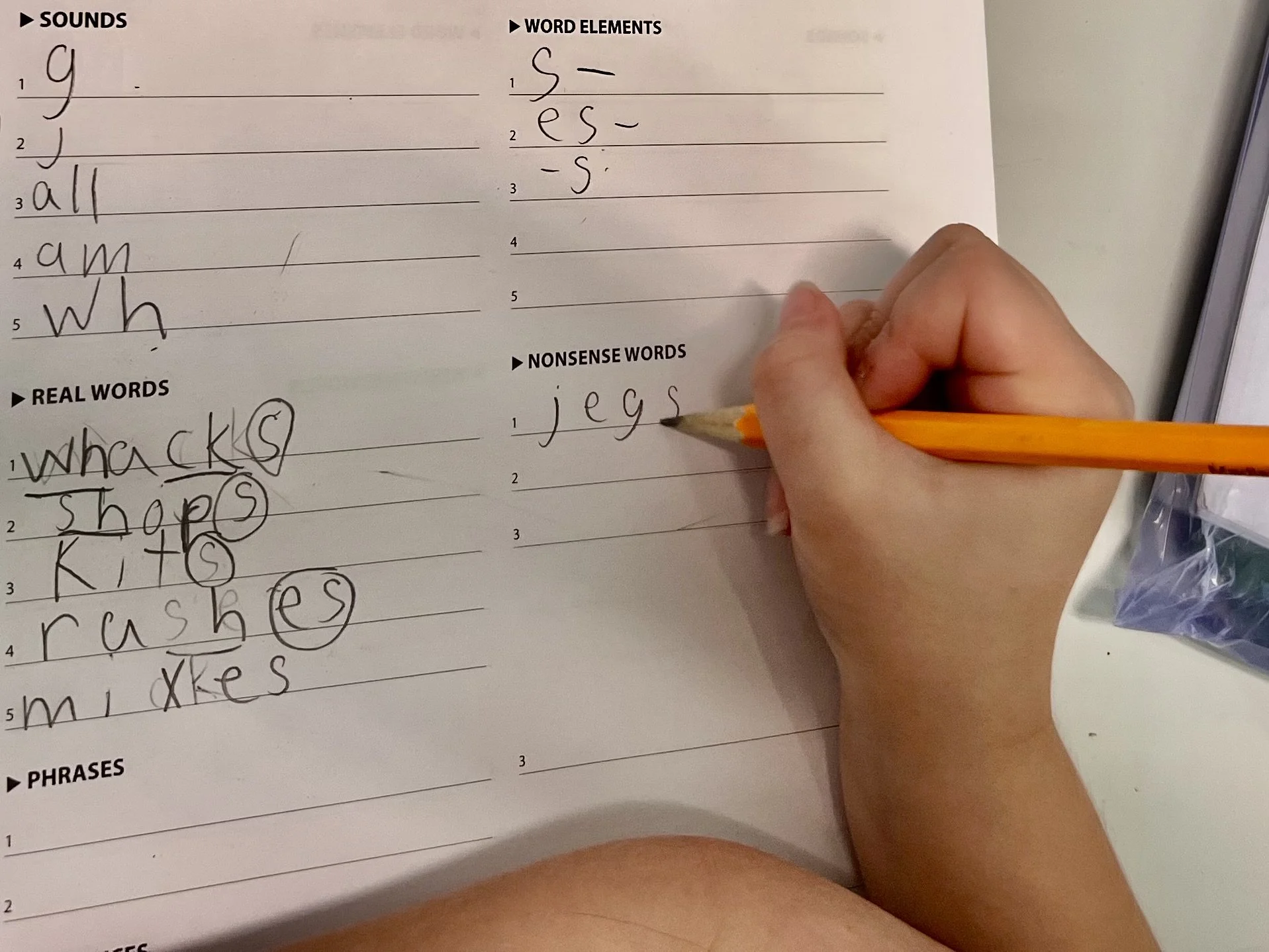
I have specialized in dyslexia instruction since my first year of teaching. I have taught Project Read, Wilson Fundations, Just Words, and Wilson Reading System; I became a Wilson Dyslexia Practitioner in 2024. Teaching reading is a science that requires systematic and multisensory instruction and I have always been dedicated to best practices in the field. I am fortunate to have worked as a teacher and coach for six years at Charles Armstrong School in the Bay Area, a specialized institution renowned for its work and research with neurodivergent learners. At Armstrong, I learned to embed dyslexia instruction and universal design for learning principles across content areas, broadening my effectiveness at serving the whole child.
My approach to tutoring is informed by both my professional expertise and my personal experience. As a parent myself, I deeply understand both the challenges families face and the importance of finding collaborative, trusted support for your child. My own journey with executive functioning challenges and perfectionism led me to yoga and mindfulness—practices that transformed my focus and became central to how I support students. I teach the same academic and self-regulation strategies that have helped me thrive in school and my career. ~Suzy Kosh
Philosophy
"There is a crack in everything. That's how the light gets in."
— Leonard Cohen
Every learner arrives carrying something — a diagnosis, a frustration, a story about who they are and what they can't do. Before any instruction begins, before any strategy is introduced, one thing has to happen first:
They need to feel safe.
Light in Everything Learning is built on a simple belief: that learning is a relationship before it is a curriculum. That the child who can't decode, the teenager who can't organize, the adult who can't breathe through anxiety — they don't need fixing. They need someone who sees them whole, meets them where they are, and builds from strength.
This framework reflects 20 years working with learners who think differently — students with dyslexia, autism, ADHD, anxiety, and every beautiful variation of the human mind. It also reflects a newer understanding: that the mind, the emotions, and the body are not separate systems. They are one system, and the most powerful interventions work with all three.
The Whole-Learner Principle
A student who cannot regulate cannot learn. A teacher who cannot breathe cannot teach. A parent who cannot understand the system cannot advocate. Light in Everything works with all of them — because the learner doesn't exist in isolation.
The Framework: Three Doorways, One Understanding
Most educational services offer one thing: tutoring, or therapy, or coaching. Light in Everything offers one understanding of the whole learner, delivered through three integrated doorways. A family may enter through any door — what they find inside is a practice that sees the complete picture.
MIND — Structured Literacy & Executive Functioning
Evidence-based reading intervention and cognitive strategy instruction for learners with dyslexia, learning differences, and executive functioning challenges.
— Wilson Reading System instruction (certified Dyslexia Practitioner)
— Structured literacy approaches aligned with the science of reading
— Executive functioning coaching: planning, organization, time management, self-monitoring
— SRSD writing strategy instruction
— Comprehension strategy development using two-read process
— Homeschool group instruction in structured literacy and writing
— IEP review, advocacy, and educational consulting for families navigating the system
EMOTION — Regulation, Relationship & Advocacy
Trauma-informed, relationship-first support that helps learners, teachers, and families build the emotional foundation that makes learning possible.
— Social-emotional learning facilitation (SEL*F certified through Breathe for Change)
— Behavioral support planning rooted in ABA principles and compassionate practice
— Student observation and individualized learning plans
— Teacher coaching: classroom management, differentiation, reading the room
— Parent education: understanding learning differences, navigating IEP processes
— Professional development for schools and educator teams
BODY — Yoga, Mindfulness & Physical Wellness
Embodiment practices that help learners regulate, focus, and build the physical foundation for cognitive and emotional growth.
— Yoga instruction for children, teens, and adults (CYT 200 through Breathe for Change)
— Mindfulness and breathwork integrated into learning sessions
— Movement breaks and sensory regulation strategies for classrooms
— Personal training and wellness coaching certification
— Educator wellness: yoga and mindfulness for teacher resilience and burnout prevention
How It Works
Every engagement begins the same way: with listening. Before assessments, before strategies, before any plan is made — we sit together. I learn who your child is, what they love, what frustrates them, what lights them up. I learn what you've already tried. I learn what the school has said and what you wish they understood.
Then we build — not from a template, but from the learner in front of us.
What Happens
Listen
Initial conversation with family: I review existing evaluations, psychoeducational assessments, and IEPs to understand the full picture — but I start with YOU,
because the paperwork never tells the whole story.
Observe
If appropriate, classroom or learning environment observation. Detailed written report identifying strengths, challenges, and specific recommendations.
Plan
Individualized learning plan developed collaboratively with family (school and assessor teams when invited) — informed by existing evaluations and IEP goals,
built on the learner's actual strengths.
Work Together
Regular sessions integrating the right combination of literacy, regulation, and embodiment strategies. Ongoing communication with families.
Grow & Adjust
Continuous progress monitoring. Plans evolve as the learner evolves. The goal is always independence — building skills they carry forward without me.
On Independence
The best measure of my work is when a learner doesn't need me anymore. Every strategy I teach is designed to transfer — to become the learner's own toolkit, not a dependency on mine.
Who I Serve
Light in Everything works with learners, families, and educators across a spectrum of needs:
Students & Families
Children, teens, and young adults with learning differences who need individualized support that sees the whole person.
— Students with dyslexia, dysgraphia, and language-based learning differences
— Learners with ADHD, autism, and executive functioning challenges
— Learners building academic and executive functioning skills for college and career readiness
— Homeschool families seeking structured literacy and writing instruction
— Families navigating IEPs, 504 plans, and school accommodations
— Young people who need someone to believe in them as much as teach them
Educators & Schools
Teachers, coaches, and school teams who want practical support that actually works in real classrooms.
— Professional development in structured literacy, SRSD writing, and differentiation
— Teacher coaching and mentoring (individual and small group)
— Classroom observation with actionable, compassionate feedback
— School-wide literacy consultation and MTSS development
— Educator wellness: yoga, mindfulness, and burnout prevention workshops